
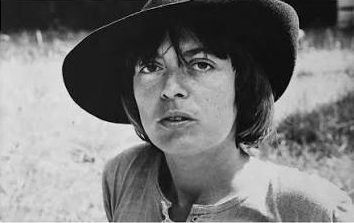

Reviewed by Alex J. Cope in Tripwire 24
I. THE BLOOD
On November 12, 2025, the Brooklyn Rail assembled a group of poets and scholars—including Paul B. Preciado, Ariana Reines, Pamela Sneed and Ksenia M. Soboleva—for a conversation about Monique Wittig’s œuvre, in honor of Winter Editions’ republication of the cult classics The Lesbian Body (Le Corps lesbien) and Across the Acheron (Virgile, non). The topic of Wittig’s relationship to queer theory lit up the chat, as just the day before Sneed had posted screenshots of a correspondence between herself and the press regarding her use of the term “queer” in a blurb for Across the Acheron. Where Sneed’s original two sentence blurb ended with “I’m so glad this work is back in circulation to revel and revisit a pioneer of Queer and femme theory,” Wittig’s estate ultimately expressed discomfort with “positioning Wittig in relation to queer and femme theory,”1 resulting in the excision of the final sentence upon publication.
A puzzling stance, as it is Preciado who provided the loving and intellectually expansive introduction to this new edition of The Lesbian Body, situating Wittig’s work within the landscape of the post-May 1968 feminist and gay liberation movements and drawing a direct line between her radical denunciation of the category of sex and “all of the processes of undoing gender that would follow, from queer performativity to trans-materialist and non-binary positions.”2 As the Brooklyn Rail panel heated up, Preciado expressed surprise that Winter Editions even invited him to contribute an introduction in the first place, knowing as he does, that Wittig’s legacy is locked in anxieties: those of contemporary queer and trans audiences grappling with a thorny past, those of the old guard of materialist feminists battling it out to calcify their own historical narratives, and those of an estate awkwardly grasping for an impossible middle ground.
What is it to love something that may or may not love you back, that may very well intend to kill you? Like Preciado, my first encounter with Wittig was pre-transition, with Le Corps lesbien. 2008: then a femme dyke looking for lesbian literature in a university library during a study abroad year in Aix-en-Provence. Wittig in the stacks astride her Trojan Horse: “Any work with a new form operates as a war machine, because its design and its goal is to pulverize the old forms and formal conventions.”3 Her lesbians were not women, were not the poreless models sharing a kiss on many a millennial dorm wall, were not human even. Were what Preciado would later term “were-dykes” in the essay “Gare à la gouine garou.” As in: “Ton poil est tout noir et brillant…tes canines entaillent m/a chair au plus sensibile….tu m/e prends sur ton dos m/a louve m/es bras autour de ton cou m/es seins m/on ventre appuyés à ta fourrure…”4
“HOT,” I wrote in the margins once I finally had my own copy. Re-reading Wittig years later in David Le Vay’s translation, I find myself thinking the same thing: “Your hair is all black and shining….your canines gash m/y flesh where it is most sensitive…you take m/e on your back m/y she-wolf m/y arms round your neck m/y breasts m/y belly against your fur.”5 Flipping back and forth between my French and English versions, I stop at the word “poil.” Hair, yes, but more specifically: pubes, body hair, fur, the hair of nudity. Animalic and feral, Wittig’s lesbians sharpened their claws, ripped each other to shreds, and savored the organs. Tears, rips, scratches, excisions, and incisions: the blood should come as no surprise.
II. THE ORGANS
Born in the United Kingdom in 1915, the late David Le Vay was a distinguished orthopaedic surgeon who parlayed his mastery of multiple languages into a parallel career as a medical and literary translator. It is not difficult to see why Le Vay was drawn to a text like Le Corps lesbien, with its striking descriptions of lesbian vivisection punctuated by imposing and fragmentary lists of body parts writ majuscule. In her introduction to Beacon Press’s 1986 edition of The Lesbian Body, Margaret Crosland assures the reader that Le Vay “has abandoned any male chauvinism long enough to translate this book,” before praising his surgeon’s insight into the text: “He has pointed out that over the centuries much poetic energy has been dedicated to the outside surface of the human body, but that nobody – with the possible exception of certain contributors to the Old Testament – has celebrated with such freedom the whole of the body, its skin, bones, organs, muscles, nerves, secretions and excretions, everything that adds up to life.”6
Fittingly, Le Vay’s strengths as a translator are most evident in the sections of The Lesbian Body that foreground the strange poetics of anatomical language, such as in this passage where the art of finger-fucking becomes a kind of endoscopic procedure: “The surest of m/y fingers the index insinuates itself along your rectum, uncompressed as far as the colon it forces a passage through the feces, it reaches the bend of the intestine, it enlarges, it turns twice on itself, it descends the length of the ascending colon, it bends again, it gains the ileum of the small intestine making almost a complete circle girdling the small intestine like a lasso.”7 His exacting approach results in translations with a high degree of syntactic fidelity. And while there is much beauty to be found in his work, his diction occasionally feels stilted, particularly in Across the Acheron, whose satirical, dykey vernacular makes different demands of a translator than the corporeal poetry of The Lesbian Body.
Further, Le Vay has historically occupied a vexed position as the primary translator of Wittig’s work into English, with a major contention being his consistent mistranslation of the French plural pronoun “elles” as “the women”—a crucial sticking point for the author who famously declared that “lesbians are not women.” Accordingly, Winter Editions has lightly revised his translations, promising that all “gratuitous occurrences of ‘woman’ and ‘women’” have been rephrased. It is an assertion that, upon a close re-reading of the French and both Le Vay translations, does not fully hold up; there are still a wealth of “women” in these new versions where in French there are none. One wonders why the press did not simply realign the translation by substituting the term “lesbians,” or by following Wittig’s own proposal to empha- size the collective pronouns “they/them” across her work.8
III. THE CYPRINE
Winter Editions has also restored Wittig’s use of the term “cyprine,” which Le Vay translated as “vaginal secretions.” Cyprine—a twist on the epithet “Cypris” used for the goddess Aphrodite—is often credited as a Wittigan neologism. Winter Editions reiterates this claim in their back matter, citing the authoritative French dictionary Le Grand Robert de la Langue Française. However, research by Aurore Turbiau troubles this narrative, as she traces its earliest known occurrence to a 1907 work of verboten lesbian erotica, Par le fouet et par les verges. Passions de jeunes miss, written by the anonymous author Tap-Tap.9 A sample sentence reads: “Elles perdaient la raison, elles se donnaient des coups de cuisses au visage pour s’encourager à ne pas suspendre de si délicieuses lascivités, leur salive se mêlait à la cyprine” (roughly translated: “They lost all reason, they thrust their thighs around each other’s faces, keeping the other from interrupting such delicious lasciviousness, their saliva mixed with cyprine.”)10
Preciado, as much a scholar of pornography as a queer theorist, views The Lesbian Body’s engagement with erotic material as one of subterfuge: “…the title is a dark joke on stupid heterosexual men, a poisoned bait for the macho literary heroes of Saint Germain des Prés who jerk off watching golden-age porn films of fake lesbians … For them, Wittig has devised a porn-gore literary device: they come looking for pink-pussy ‘lezb’ entertainment and end up with a squirt of green bile in their retinas.” (XVI) Annabel Kim’s 2018 take goes a step further, arguing that Wittig’s anatomical lexicon is intended to “purify pornographic language, to strip the words used to describe women’s bodies of their ideological charge and inject a clinical distance between them and the reader.”11 Wittig herself drew upon anti-pornography feminist thought in her theoretical writings and, at times, allied herself with figures like Ti-Grace Atkinson and Kate Millett. Her 1980 essay “The Straight Mind” lays out her materialist analysis of the heterosexual regime and cites pornographic discourse as “one of the strategies of violence which are exercised upon us: it humiliates, it degrades, it is a crime against our ‘humanity.’”12 Her framework presumes a pornography by the straight mind, for the straight mind. Notably absent is robust engagement with “anti-censorship”13 lesbian feminist thinkers à la Gayle Rubin and the burgeoning sex worker’s movements of her era (exemplified by the 1975 sex worker occupation of the Saint-Nizier church in Lyon).
While I do not wish to rehash debates about the feminist sex wars or even what constitutes pornography, I do wish to complicate Wittig’s use of the erotic (to borrow from Audre Lorde) and the myriad pleasures readers can draw from her writing. How, and when, does her imaginary—at turns clinical and grotesque-giveway to deeply arousing, and often heartwrenching, scenes of lesbian desire? Does it matter who’s reading? Some fingers slip off these pages covered in cyprine.
IV. HELL
The 1970s took its toll on Wittig and intense lesbophobia in the Mouvement de libération des femmes (the MLF) pushed her to seek exile in the United States. 1985’s Across the Acheron (Virgile, non) reflects the fallout and marks a radical stylistic departure from her previous literary experiments. Here, the topography of Dante’s Divine Comedy is redistributed pell-mell onto a mythical San Francisco. Manastabal, the anti-Virgil alluded to in the French title, guides the hotheaded, fictionalized Wittig through heaven, hill, limbo, the Acheron, and the desert. Throughout her journey, she must confront unrelentingly gruesome scenes of violence against women while she searches for her unnamed Beatrice (“the one who is my Providence”).
The reader, in turn, is guided by Sophie Lewis’s introduction to this new edition, as she covers the novel’s historical context and connects it to polemics around the inclusion of trans people (especially trans women) in feminist and lesbian spaces. Lewis argues that trans-exclusionary radical feminists (most prominently the authors of Transmania—Marguerite Stern and Dora Matout) misread Wittig in service of an essentialist, reactionary agenda. At the same time, she is careful not to misrepresent the diversity of trans thought around Wittgian gender abolition, pointing to the ways trans feminists, from Shuli Branson to Blase Provitola, wrestle with its utility and limits.
While the stakes for trans people are clearly identified in Lewis’s introduction, Wittig’s racial politics are glossed over. Enslavement is a core metaphor for the heterosexual regime throughout Wittig’s œuvre, and in Across the Acheron she casts lesbians as “runaway slaves” and straight women as an enslaved underclass—“lost souls”—who often willingly participate in their own oppression. Responding to the racist underpinnings of this recurrent analogy, scholar Alyosxa Tudor asks “how can one think of the relationship between slavery and refusing to do what heterosexuality requires in ways that are not reduced to an analogy, but rather in ways that recognise both the forming moment of a colonial past and the ongoing ‘traumatic reality’ of slavery as Grada Kilomba puts it?”14 Returning to Brooklyn Rail panelist Pamela Sneed: her 1998 collection Imagine Being More Afraid of Freedom than Slavery demonstrates how this may be done. She examines the lasting impacts of the transatlantic slave trade from a Black lesbian perspective, evoking revolutionary figures such as Harriet Tubman and Assata Shakur along the way (the work, in fact, opens with a versified epigraph from Wittig’s second novel Les Guérillères: “There was a time when you were not a slave,/remember that./Make an effort to remember,/or failing that,/invent”).15
Across the Acheron does invite critique, and in portraying herself as a cartoonish Dantean protagonist, Wittig skewers her own dogmatism and disillusionment. All dialogue is confined in parentheses, visually mirroring the restrictive circles of heaven, hell, and limbo. Her avatar seeks to proselytize, yet fails to connect; she longs to be heard, but struggles to openly listen to others–be it the lost souls or her guide Manastabal. This narrative friction allows for a level of nuance that is often lacking in Wittigian theory. For example, when she charges at johns in a brothel, a sex worker snaps back, simultaneously mobilizing homophobic rhetoric and articulating an alternative view of sex work: “(…Go and play at righting wrongs in Castro, for that’s where you belong…Fly to the aid of little boys who are prey of perverts waiting to corrupt children. Do you think I don’t know what I’m doing? It’s called selling one’s charms. Believe me, it’s better to sell one’s charms than to sell one’s tears, for that’s what’s in store for me otherwise. Thanks for your moralizing sermon of love. Call it what you like, for me it’s work…)”16
Hell, then, is defined both by the straight mind’s brutal subjugation of women (whose mangled corpses, unlike those of the dismembered dykes of The Lesbian Body, cannot be resurrected) and the intransigence and bigotry that keep members of an oppressed class pitted against each other.
V. LIMBO
Wittig and Manastabal’s journey through hell is broken up by retreats to the limbo that is a lesbian bar. The contentious dynamic between the two protagonists softens in these momentary passages, giving way to thoughtful considerations of their experiences in hell. In one such bar conversation, Manastabal provides a moving defense of bicephalics—two-headed souls who straddle hell and limbo: “(…It’s true I’m convinced, and by experience, that the highest human intelligence is found among the lost souls. The reason is this: once they are aware of what is happening they set themselves the challenge of exercising their intelligence through all the laws that govern their world and immediately develop it in many more directions than is required in the dominant camp…)”17 It is a bittersweet moment that speaks to the underlying heartbreak many lesbians of Wittig’s generation intimately understand, having been rejected by comrades they once dearly loved and who once loved them back.
Nevertheless, the lesbian bar is an uneasy reprieve. While the character Wittig admires the shaved heads and black leather of its regulars, Manastabal reminds her that they are “(…not angels but the emancipated, who, as the price for their freedom, go hungry. This will explain why their mood might be affected and why they might kill each other in their exasperation and impotence).”18 It is a stark reminder of the ways that even guérillères—lesbian fighters at war with the heterosexual regime—may enact violence against each other. Where the transformative violence of The Lesbian Body inevitably leads to reassembly, the intracommunal violence alluded to in limbo is bleaker, anticipating Wittig’s Paris-la-Politique, a collection of parables on the horrors of infighting and community disintegration. In spite of it all, Wittig is seduced by her time in limbo, however fleeting, and the “active passion” of its pool-playing inhabitants.
A handful of the bargoers are explicitly racialized, a relatively rare detail in Wittig’s novels. Here, one might read Wittig against herself. Her use of a totalizing enslavement metaphor forecloses a substantial examination of racism in lesbian spaces, but her description of their bodies and their lack of dialogue and individuation can be read as a kind of fetishization: “I marvel at their compact, smooth biceps. I see them moving round the billiard tables, unhurried, letting their black or golden skin gleam under the light. At a given moment they seem to have halos and my ears ring. I’m drinking neat tequila with salt and lemon, and as it invigorates me I feel impatient because I’m not getting up to have a closer look at them.”19
There are other silences at play here. One can infer that these circles of limbo are likely situated in the Castro or the Tenderloin, San Francisco’s historic gay neighborhoods. And yet gay men are present absences in the text: alluded to, but never directly represented. The era’s transgender underground goes unacknowledged. Analyses of Wittig’s late fiction are typically contextualized by her ostracization from the French women’s moment, but little is made of her complex relationship with the Front homosexuel d’action révolutionnaire and, by extension, Les Gazolines, a group of predominately transfeminine provocateurs that operated within the FHAR. Indeed, the short-lived organization Les Gouines rouges (the Red Dykes), of which Wittig was a founding member, was made up of lesbians who split off from the FHAR and the MLF. Former gouines rouges Marie-Jo Bonnet and Christine Delphy have gone on to become prolific TERFs. We cannot say how Wittig might’ve positioned herself in today’s transantagonistic climate (although we can point to her falling out with Delphy over the latter’s biological essentialism). However, her dealings with other branches of the gay liberation movement is a question ripe for more honest and extensive research.
For what it’s worth, Wittig often evinced a strong identification with canonical gay male authors of the 20th century, particularly Marcel Proust and Jean Genet. Recounting the history of lesbian literature in “Some Remarks on the Lesbian Body” (included as back matter in Winter Editions’s reissue), Wittig reflects on the ways gay men furtively expressed their homosexuality through the lens of lesbianism, adding: “Not that I want to blame them; where would I be without them? When I was fifteen they told me everything I needed to know.”20 It is a sentiment echoed in her famous essay “The Trojan Horse,” where she credited Proust with giving her the tools to “lesbianize” the text—“turning the ‘real’ world into a homosexual-only world.”21
We get a wink of this cross-affiliation in Wittig’s limbo when Manastabal “with the gentleness of a Virgil ready to yield to the first good-looking boy to come by”22 accepts an invitation to dance. In the shadow of young girls in flower: growing pains in the smokey recesses of a lesbian bar.
VI. PARADISE
Ephemeral glimpses of paradise come to Wittig as snowflakes drifting from the heavens, signaling her desire to transcend the cruelties of hell and the ambivalence of limbo. As Dante’s Divine Comedy ends in Paradiso, so too does Wittig’s Across the Acheron. The devotional language of the Lesbian Body is stripped of its violence, becoming something altogether angelic. We have crossed that river of woe and forgetting to arrive in the gentle arms of Providence. Flanked by dykes on bikes, the final sequence heralds a return to intricately poetic lists, a hallmark of Wittig’s earlier novels. There are sauce pans and carving knives, clarinets and saxophones, blackbirds and cormorants, strawberries and cantaloupes.23
What utopian homosexual has not found paradise in a picnic, amidst a coterie of queers seeking an alternate reality? Perhaps this is where Wittig might extend a hand to the communal reverie of Larry Mitchell’s The Faggots and Their Friends Between Revolution. As the global far right consolidates its power, contemporary readers are hungry for the queerly divine visions Wittig and Mitchell may offer us from the other side. The dancer and poet Léa Rivière takes up their mantle in 2023’s L’odeur des pierres mouillées, eking out space for those of us blessed to exist at the border of trans, fag, and dyke subcultures (what is called “le milieu transpédégouine” in French).
VII. METAMORPHOSIS
In 1985, Wittig and her partner in life and art, Sande Zeig, spoke to journalists Bernard Pradinaud and France Roche about their play, Le Voyage sans fin (The Constant Journey), a genderless adaptation of Don Quixote. On the question of identifying with “masculine” heroes, Wittig remarked: “I think that, on the level of the imagination, it doesn’t make much of a difference…A hero is a hero. Imagination works like that.”24 As I revisit Wittig in the present, a gender and nearly two decades away from our first rendez-vous in the library, it is her commitment to the fluid realm of the imagination that touches me the most. Bad faith actors and biological essentialists who claim her miss this messy indeterminacy, seeing windmills where Wittig imagines something stranger and more resistant to interpretation.
The Wittig I love is naked in a laundromat, admiring her glossy fur and glittering scales while heterosexual women fear the “lesbian plague.” She is Isis, unearthing Osiris’s clit from the mud and piecing the body back together with spit, tears, and cyprine. She wantonly bends and blends forms, lending credence to her fictive guide Manastabal, who reproaches her for a barbaric “confusion des genres.”25 It is the Wittig who, in private, close friends called “Théo.”
Monique, Théo, Wittig: I close your books and run my finger down their spines. I caress my furred thighs, made lusher by daily pumps of testosterone, and ask: what is it to love something that may or may not love you back?
1 Quotes taken from screenshots posted on Pamela Sneed’s instagram page on November 14, 2025.
2 Paul B. Preciado. Introduction. The Lesbian Body, by Monique Wittig (New York: Winter Editions, 2025): XV
3 Monique Wittig. The Straight Mind. (Boston: Beacon Press, 1992): 68-69
4 Monique Wittig. Le Corps lesbien. (Paris: Les Éditions de Minuit, 1973): 14
5 Monique Wittig. The Lesbian Body.(New York: Winter Editions, 2025): 42
6 Margaret Crosland. Introduction. The Lesbian Body, by Monique Wittig (Boston: Beacon Press, 1986): 7-8
7 Monique Wittig. The Lesbian Body. (New York: Winter Editions, 2025): 117
8 Monique Wittig. The Straight Mind. (Boston: Beacon Press, 1992):
9 Aurore Turbiau. “Le mot “‘Cyprine’: Wittig ou pas Wittig ” Littératures engagées. https://doi.org/10.58079/oe14
10 Tap-Tap, Par le fouet et par les verges. Passions de jeunes miss (Paris: Isidore Liseux, 1907): 44
Many thanks to Maude Bougerol for her feedback on my translation.
11 Annabel L. Kim, Unbecoming Language. Anti-Identitarian French Feminist Fictions, (Columbus: Ohio State University): 198
12 Monique Wittig. The Straight Mind. (Boston: Beacon Press, 1992): 26
13 The term “pro-sex” is often used to orient Gayle Rubin et al. within the context of the feminist sex wars. In truth, their collective body of thought is much more complex and capacious than the term implies. I’ve elected to use the term “anti-censorship” feminist to indicate their specific positioning on the question of pornography.
14 Alyosxa Tudor. “Im/Possibilities of Refusing and Choosing Gender.” Feminist Theory, 20(4): 361-380.
15 Pamela Sneed, Imagine Being More Afraid of Freedom than Slavery (New York: New York ReLit, 2023)
16 Monique Wittig. Across the Acheron. (New York: Winter Editions, 2025): 121
17 Monique Wittig. Across the Acheron. (New York: Winter Editions, 2025): 96
18 Monique Wittig. Across the Acheron. (New York: Winter Editions, 2025): 59
19 Monique Wittig. Across the Acheron. (New York: Winter Editions, 2025): 38
20 Monique Wittig. The Lesbian Body. (New York: Winter Editions, 2025): 202
21 Monique Wittig. The Straight Mind. (Boston: Beacon Press, 1992): 74
22 Monique Wittig. Across the Acheron. (New York: Winter Editions, 2025): 115
23 Monique Wittig. Across the Acheron. (New York: Winter Editions, 2025): 139-141
24 My translation from the French: “je pense qu’au niveau de l’imaginaire, on fait pas une telle différence…Un héros est un héros. L’imaginaire marche comme ça” (Antenne 2, 1985)
25 The double meaning of “genre” in French (referring to both aesthetic genre and gender) is lost in Le Vay’s translation, as he translates “Parfois ta confusion des genres a véritablement quelque chose de barbare” as “Your confusion of styles is sometimes quite barbaric.” A cheekier, updated translation might be: “Sometimes your genre troubles are awfully barbaric”